
Quick Answer
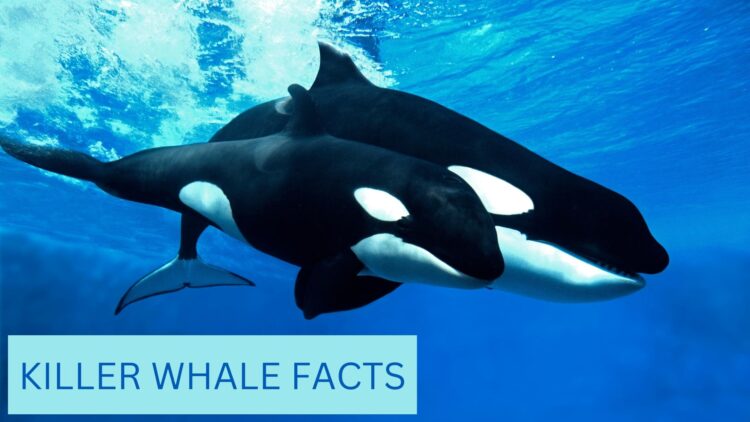
The killer whale (Orcinus orca), often called an orca, is the largest member of the dolphin family and one of the ocean’s most powerful apex predators. These intelligent marine mammals live in highly organized family groups called pods and hunt a wide variety of prey including fish, sharks, seals, and even other whales.
Killer whales are found in oceans around the world and are easily recognized by their striking black-and-white coloration and tall dorsal fin.
Key Killer Whale Facts
| Scientific name | Orcinus orca |
|---|---|
| Family | Dolphin family (Delphinidae) |
| Average length | 16–26 ft |
| Weight | 3,000–12,000 lbs |
| Lifespan | 50–80 years in the wild |
| Diet | Fish, squid, seals, sharks, whales, dolphins |
| Habitat | All major oceans worldwide |
| Conservation status | Varies by population |
Introduction
The killer whale is one of the most recognizable marine mammals on Earth. Despite its name, it is actually the largest species in the dolphin family.
Killer whales belong to the toothed whale suborder, meaning they possess teeth instead of baleen plates.
According to NOAA Fisheries, killer whales are apex predators that occupy the highest position in the marine food web.
Physical Characteristics
Killer whales are powerful marine mammals with a streamlined body built for speed and strength.
| Characteristic | Male | Female |
|---|---|---|
| Length | 20–26 ft | 16–23 ft |
| Weight | 8,000–12,000 lbs | 3,000–6,000 lbs |
| Dorsal fin | Up to 6 ft tall | Smaller and curved |
Their black back, white underside, and white eye patches make them easy to recognize in the ocean.
Like all toothed whales, killer whales have a single blowhole and powerful jaws with cone-shaped teeth designed for gripping prey.
Killer Whale Size Comparison
| Animal | Average Length |
|---|---|
| Killer Whale | 20–26 ft |
| Great White Shark | 15–20 ft |
| African Elephant | 20–25 ft |
| Bottlenose Dolphin | 10–14 ft |
Diet and Hunting
Killer whales eat a wide range of marine animals. Their diet depends largely on the population and environment they live in.
Some pods specialize in hunting fish, while others hunt marine mammals.
Killer whales often cooperate in groups to capture prey. These coordinated hunting strategies allow them to hunt animals much larger than themselves.
Despite being dolphins themselves, killer whales sometimes prey on other dolphin species.
Echolocation
Killer whales rely heavily on echolocation to find prey and navigate underwater.
They emit clicks that bounce off nearby objects, allowing them to detect animals and obstacles even in dark or murky water.
Habitat and Global Distribution
Killer whales live in every major ocean, from polar seas to tropical waters.
However, they are most commonly found in colder, high-latitude environments where food is abundant.
According to Smithsonian Ocean, killer whales have one of the widest geographic distributions of any marine mammal.
Orca Ecotypes (Different Killer Whale Types)
Scientists recognize several ecotypes of killer whales with distinct diets and behaviors.
| Ecotype | Main Diet | Habitat |
|---|---|---|
| Resident | Fish (especially salmon) | Coastal waters |
| Transient (Bigg’s) | Marine mammals | Wide-ranging |
| Offshore | Fish and sharks | Open ocean |
Social Structure
Killer whales have extremely stable family groups called pods.
A pod may include multiple generations, including grandparents, parents, and offspring.
These strong family bonds can last for decades and help pods coordinate hunting, migration, and communication.
Orcas communicate using clicks, whistles, and pulsed calls. Each pod can even develop its own vocal dialect.
Mating, Reproduction and Lifespan
Female killer whales have a gestation period of roughly 15–18 months.
Calves are typically born tail-first and are immediately guided to the surface to breathe.
The calf drinks rich fatty milk from its mother during its early development stages. Learn more in our article about dolphin milk.
Female orcas can live over 80 years, while males typically live 50–60 years in the wild.
False Killer Whales
The false killer whale resembles the killer whale but is a different species.
| Feature | Killer Whale | False Killer Whale |
|---|---|---|
| Color pattern | Black with white patches | Solid dark gray or black |
| Average size | 20–26 ft | 15–17 ft |
Albino Killer Whales
Albino or all-white killer whales are extremely rare.
One famous example known as “Iceberg” was first documented near Russia’s Commander Islands in 2010.
Aside from coloration, albino killer whales behave similarly to other orcas. Learn more in our article on the white killer whale.
Killer Whales and Humans
Despite their powerful hunting ability, killer whales rarely attack humans in the wild.
According to NOAA Fisheries, there are no confirmed cases of wild killer whales intentionally hunting humans for food.
Most recorded attacks have occurred in captivity between trainers and captive orcas.
Although rare incidents have occurred, there is no evidence suggesting killer whales naturally hunt humans as prey.
Frequently Asked Questions
Are killer whales actually dolphins?
Yes. Killer whales are the largest members of the dolphin family.
How big do killer whales get?
Adult males can reach 26 feet long and weigh more than 10,000 pounds.
Where do killer whales live?
They live in every ocean worldwide but are most common in colder waters.
What do killer whales eat?
Their diet includes fish, squid, seals, sharks, dolphins, and even whales depending on the population.